

Coffee scoring decides how coffee is graded, how it is sold, and how much is paid for it. In specialty coffee, it is scored out of 100, and 80 points and above is considered specialty. In Ethiopia, grades from 1 to 5 are also used, and in the specialty market almost nobody looks below grade 2.
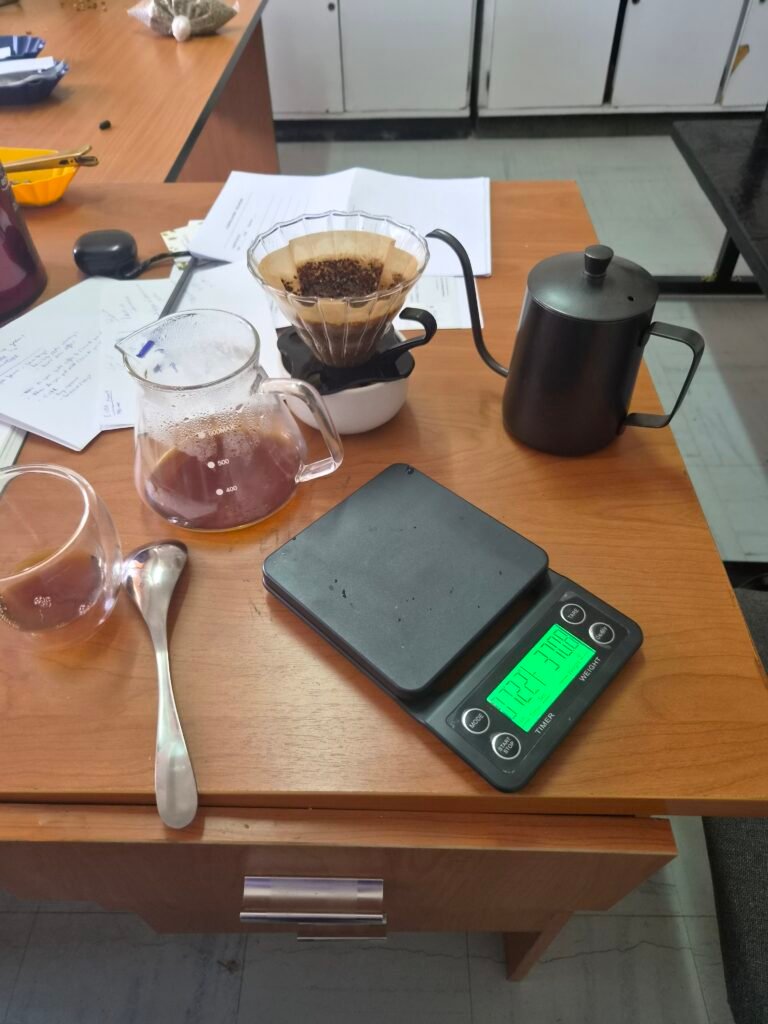
In October, at a lab in Addis Ababa, I brewed a V60 with a Grade 4 Yirgacheffe coffee. It tasted excellent to me. Later, we roasted one from Guji, also Grade 4. Same thing.
It wasn’t a miracle or a grading mistake. It was a question I’ve been asking myself for a long time: what does a coffee score actually measure, and who does it benefit?
What coffee scoring measures, and what it doesn’t
The Ethiopian system combines two things: physical defects in the green bean and quality in the cup. In assessments following the former SCAA protocol, physical appearance accounts for 40% of the score and cup quality for 60%. In practice, grades 1 and 2 are sold as specialty, and grade 3 and below as commercial.
A buyer 6,000 kilometers away needs a common language to know what they are ordering, so there is a logic to it. However, a grade measures a lot at a specific moment, according to specific criteria. It does not measure:
- Cup potential. A bean with more physical defects can still yield a clean, complex cup if sorted and roasted well.
- The work behind it. Two coffees of the same grade can come from a farm that pays well and another that doesn’t.
- Who grew it. The grade travels with the lot. The producer’s name almost never does.
And what happens to that Grade 4 coffee that tastes like a Grade 1? It gets sold as commercial, at a commercial price. Whoever knows how to spot it keeps the difference.
What gets rewarded at a coffee trade show
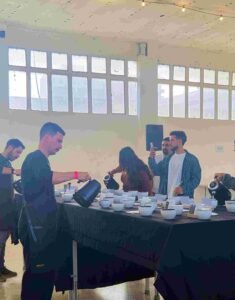
In November I went to MY Coffee Awards in Barcelona. I attended two cuppings. At the first one, an importer presented an entire table of coffees from Colombia. At the second one, hosted by a coffee subscription, we were asked to introduce ourselves before starting.
I said I was a former barista and now work on traceability and the EUDR, so that regulation can be a bridge rather than a wall. They asked in which country. I answered that in no particular country, though I had just returned from Ethiopia. I wanted to listen first to how things are at origin before proposing a solution to a problem they might not even have.
They asked what I thought of it. I replied that I couldn’t see much because of the security situation, but I did speak with exporters and see what it’s like for them. My goal is for coffee farmers to get paid what they deserve, and from Europe it’s very easy to propose solutions. Without going to origin, a piece of the puzzle is missing.
You could tell they were surprised. Not because nobody cared, but because at a trade show almost nobody brings it up. There, people talk about what the coffee tastes like, not what is paid for it. The rest of the event moved in the same direction. At the booths, baristas served endless lines. Brand owners only stopped to talk if you came to buy. Much of the space revolved around machines, grinders and newcomers to the industry. Above all, it was a European trade show talking about coffee for Europeans.
Competitions have done a lot for specialty coffee. They have raised the technical bar for baristas and roasters, and they have shown the public that coffee can be more than a morning cup. But the focus is on the final link in the chain. The score and the applause stay where the coffee is brewed, not where it is grown.
Coffee like wine: the missing middle ground
In Addis, Chalita Dono, from RDT Coffee, told me something that stuck with me: coffee should be sold like wine.
There’s supermarket wine for everyday drinking and wine that costs a fortune and almost nobody opens. And in between there’s a huge world: wine for a special dinner, as a gift, to share at a tasting with friends. That wine is sold as an experience. People talk about the region and what to pair it with. Nobody is surprised to pay a bit more for a good bottle.
With coffee, it’s different. We have everyday coffee, bought on price, and competition coffee, with lots auctioned at sky-high prices. But people rarely buy a coffee for an occasion, share it at a tasting, or give it as a gift thinking about where it comes from.
That middle ground is right where the Grade 4 coffee I tried in Addis would fit. It isn’t an auction lot, but it’s excellent, and it deserves better than being sold as commercial. If that space existed, that coffee would have people who value it, and the producer would get a price that reflects it.
Coffee doesn’t need to be more expensive for everyone. It needs room for the coffee in between.
How to look beyond the coffee score
You don’t have to wait for the system to change in order to buy differently. Three things are in your hands:
- Cup the sample yourself. A coffee score is a reference point, not a verdict. If a Grade 3 or 4 surprises you in the cup, you have an opportunity in quality and price, and so does the producer.
- Ask about the price paid. Not what you pay the exporter. What the person who grew the coffee actually received. If nobody knows, that’s the missing piece of data.
- Put the name on the bag. The farm’s, the cooperative’s, or the producer’s, with their permission. It’s the closest thing a coffee can have to a wine label.
All in all, coffee scoring organizes the market, but it doesn’t distribute value. An excellent Grade 4 sold as commercial is money lost along the way, and it almost never makes it back to the farm.
That’s why we document origin and price, not just quality. We explain it in From Purpose-Driven Coffee to Specialty Hypocrisy and in When Sustainability Speaks and Trade Shows Don’t Listen. And if you want to know how we work, it’s in About Us.
These are the kind of stories we tell.
A Coffee & A Story exists so coffee can be told with the truth up front: origin, fair pricing, real traceability. If you share this view, come along with us.