

A few days ago, I had the opportunity to talk and exchange ideas with Amanuel Abenet, founder of Starabica (based in UAE), a platform connecting Coffee Roasters/Importers with Ethiopian Coffee Exporters and Farmers, and also an export manager at Caroga Coffee, an Ethiopian coffee exporting company.
From the start, it was clear we shared a critical view of conventional certifications as well as the belief in fairer and more horizontal relationships between producers and consumers. We also connected in the desire to use technology not as a marketing tool, but as a means of dignity and connection.
Coffee Farming in Ethiopia
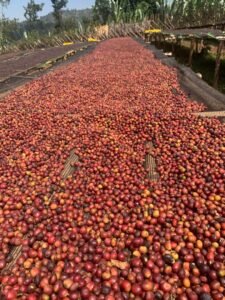
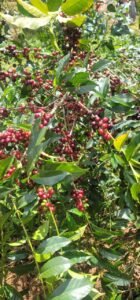
Amanuel spoke about the context of coffee farming in Ethiopia, a country known as the birthplace of Arabica coffee. The diversity of its landscapes gives rise to coffees with wildly distinct flavor profiles depending on the region that coffee grows in. Coffee farms in Ethiopia are usually passed down through generations, along with the knowledge of how to grow coffee, the traditions and methods.
However, smallholder farmers face ongoing challenges:
- Market instability and unfair pricing structures
- Climate change, threatening crops and traditions
- Limited access to infrastructure, internet, or financial services
- Pressure to shift toward faster, more profitable crops like khat
What Starabica Brings
Through Starabica, Amanuel works with groups of small-scale producers who live in the same village. They put their harvest together and someone, who is certified by the government, takes it and export it. That person then distributes the compensation among the farmers. What stood out most to me is how committed Amanuel is to preserving local knowledge and each family’s identity. He also works to shift how farmers perceive their coffee, calling it “gold,” not only for its market value but because it represents their history, labor, and dignity. To value coffee is to value themselves.
Looking ahead, Amanuel wants to document what happens after the harvest. We often hear about the technical aspects of coffee, but rarely about what a sale actually means for a farming family (the decisions it involves, the hopes tied to it, the way it shapes their future). That part of the story remains largely invisible, yet it’s essential to understanding the real value of a cup.
Shared Ground with AC&AS
At AC&AS, we feel a strong connection with this vision. We share the goal of prioritizing the voices of producers, of creating traceability that is not only technical but also narrative, and of exploring paths head towards real agency within the communities through storytelling.
For ACAS, this meeting was another confirmation that there are other ways of doing things, that don’t just motivate farmers, but open up real possibilities for autonomy and sustainability on their own terms.
Thank you, Amanuel, for your time, your openness, and your generosity of sharing knowledge and points of view with us. The path continues.
You don't have to figure this out alone.
At A Coffee & A Story we help coffee farmers and cooperatives document their traceability the way Europe now requires: geolocation, harvest records, proof of origin, without the technical jargon or the cost of entry. Tell us about your farm and we’ll show you what the first step looks like.