

A trip to coffee origin to research how the EUDR is implemented is usually imagined as a visit to a farm, a conversation with coffee farmers, meetings with exporters, and handshakes.
I went to Ethiopia in October looking for exactly that. My goal was to see for myself whether coffee farmers needed help complying with the EUDR and how much they were actually getting paid for their coffee. Not once did I step foot on a farm. What I found was something else entirely, and it has shaped A Coffee & A Story far more than any postcard visit ever could.
The Initial Plan: Coffee and the EUDR
The plan was simple. Two weeks: from October 12 to 25, visiting coffee farms in the south, talking to producers, and meeting with the exporters who buy from them. Armed with my Decathlon trekking trousers and an open mind, I was ready to listen, learn about the EUDR bottleneck at origin, and see a coffee farm in person.
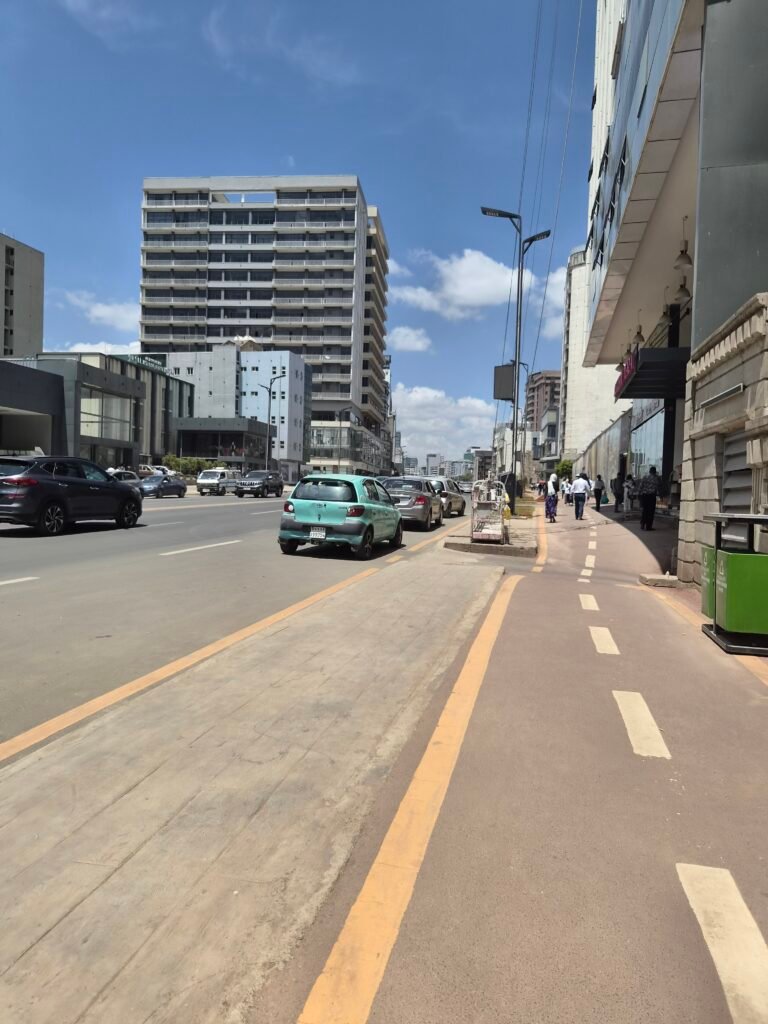
The security situation in the producing regions made it impossible to leave Addis Ababa. The people I was working with advised against traveling outside the city, so the trip was confined to the capital.
That shifted who I was able to talk to. Addis is home to the exporters, the suppliers who feed them coffee, the labs, the national coffee authority (ECTA), and the consultants. The coffee farmers were hundreds of kilometers away.
So instead, I mostly listened to the people in the middle of the supply chain. As it turned out, that was where much of what I needed to know was sitting.
EUDR at Origin: Data Was the Easy Part
Sitting down with an Ethiopian exporter, we reviewed what the EUDR requires for her coffee: plot coordinates, farm data, product details, and harvest info. We mapped it all out in a single afternoon using a free app.
What was missing wasn’t technical:
- ECTA Approval: The exporter or supplier requests access, ECTA sends the requirements, the data is submitted, and they review it. People told me it takes anywhere from two to four weeks. Those who deal with ECTA on a daily basis say it usually takes longer; and right now, the entire country is submitting data at once.
- Each European operator has to re-enter all the data into their own Due Diligence Statement.
- The Timeline: Geolocation coordinates are captured once per plot. ECTA approval, on the other hand, has to be repeated.
Geolocation remains an issue where there is no mobile coverage and no one physically visiting the farm. In an organized supply chain, gathering the data is fast. What takes time is everything that comes after.
And who pays for that “after”?
The Price of EUDR as the Deadline Approaches
That same exporter showed me the quote she had received to manage her compliance. In August, the range was between $2,500 and $4,000. By October, for the exact same scope of work, they were asking for 3.5 million Birr: roughly $21,000 at the exchange rate at the time.
The only thing that had changed was the date on the calendar. Large and medium-sized European enterprises must comply starting December 30, 2026, and those selling compliance services know it.
Another exporter shared his plan: pay between $500 and $2,000 to comply, then raise prices for his buyers by 15 to 20 cents to cover the cost.
It’s a reasonable way to split the bill. But it leaves an unanswered question: how much of that price increase ever reaches the farmer?
Who Holds the Risk, and Who Keeps the Price
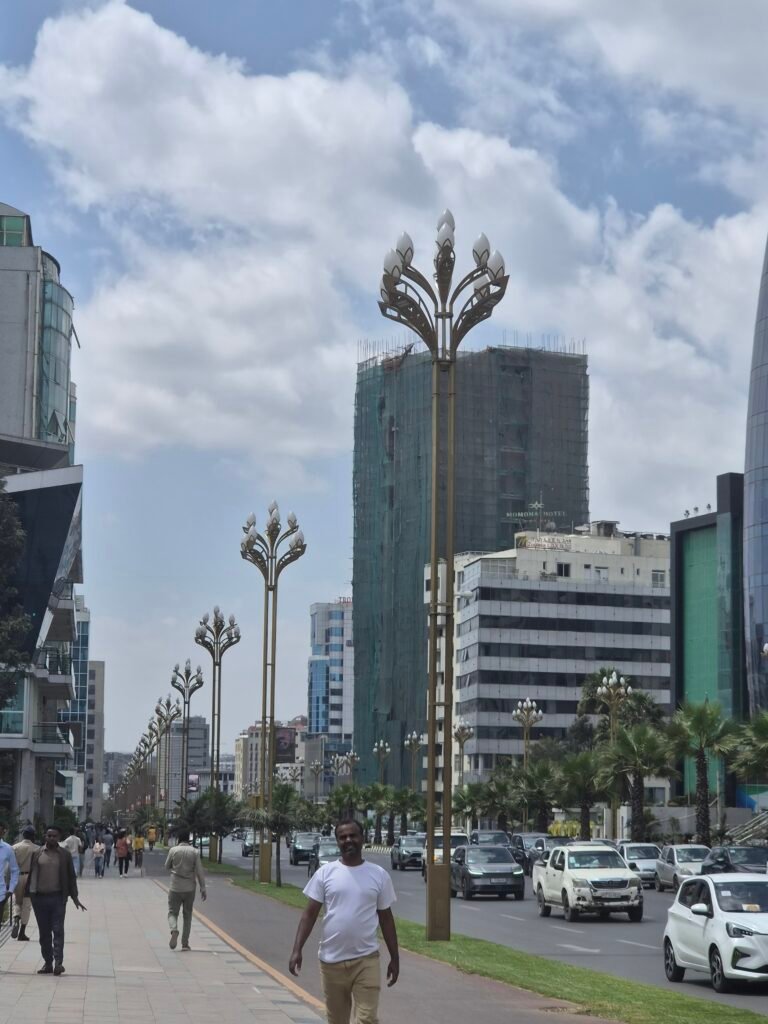
Being in Addis gave me a clearer picture of how the coffee industry operates in Ethiopia.
Every week, ECTA sets a minimum export price tied to futures markets and exchange rates. The exporter and the supplier sign a contract that ECTA must approve. From that point on, the exporter can buy directly at the agreed price.
What does not exist is a national minimum for what farmers are paid for their cherries. An industry professional shared a figure with me that I haven’t been able to cross-check against public sources: out of green coffee sold at around $5, only 10 to 15 cents reach the producer. If confirmed, we are talking about 2% to 3%.
Meanwhile, EUDR risk stays squarely with those in the middle.
If a single plot fails verification, the entire batch cannot enter Europe; and the entity that already bought that coffee is the exporter. We saw this reflected in the numbers published in the ODI report on October 16: up to 60% of smallholder Ethiopian farmers could end up excluded from EU trade. The same report recommends supporting first-mile aggregators, who already know the producers personally.
Takeaways from My Trip
Most trip reports from origin show the farm, the smile, and the cup. Rarely do they show the budget that multiplied eightfold, the file waiting on a desk, or the tiny percentage that makes it back to the grower.
Not stepping onto a farm was disappointing. But it also forced me to look at the most technical segment of the supply chain which is the part where it’s decided whether a coffee enters Europe, and how much the person who grew it actually earns.
I returned with fewer certainties and a much sharper project. Three things have shifted in how we approach this:
Farmers are not going to pay for this. They have plenty of reasons not to. The cost must be absorbed by whoever sells to Europe or buys in Europe.
The value is not in collecting data. It lies in verifying it before it reaches ECTA, accompanying the process, and ensuring the producer knows what they are signing. One exporter mentioned that, in the program he is familiar with, farmer consent is treated as implicit once the farm profile is created. That concerns us.
Trust is the product. An exporter explained to me that she pays her farmers via bank transfers. That leaves a clear paper trail of the actual price paid. Where that record exists, it can be documented—which is precisely what is missing from most traceability files.
Specialty coffee needs less postcard drama and more truth on the ground. That is what we’ve advocated for since writing about decolonizing coffee and the hypocrisy of purpose-driven coffee. If you want to know how we work, you can find it under About Us.
Sources
- ODI, The case of EUDR in Ethiopia, October 16, 2026: 60% of smallholders at risk; recommendations on first-mile aggregators.
- Regulation (EU) 2023/1115 (EUDR), EUR-Lex: December 30, 2026 deadline for medium and large enterprises.
- European Forest Institute, guidance on the Ethiopian coffee supply chain and EUDR, July 2026.
- ACAS primary conversations in Addis Ababa, October 12–25, 2026 (exporters, supplier, laboratory). Anonymized.
These are the kind of stories we tell.
A Coffee & A Story exists so coffee can be told with the truth up front: origin, fair pricing, real traceability. If you share this view, come along with us.